
Happy customers never get asked
The job ends, the crew leaves, and nobody sends a review link. Competitors with a steady ask keep collecting fresh proof.
I help local businesses get their own customers to leave reviews after the job is done. One request covers Google, Yelp, and Facebook, with photo prompts and a reply you send while the work is still fresh.
Search & growth friction
People compare Google, Yelp, and Facebook before they call. These are the gaps that cost you that call.
The job ends, the crew leaves, and nobody sends a review link. Competitors with a steady ask keep collecting fresh proof.
A star on Google does not help the customer who checks Yelp or a Facebook recommendation. Short posts with no photo are easy to skip.
Prospects open the listing, see no recent reviews and no owner reply, and call the business that answered last week.
Proof journey
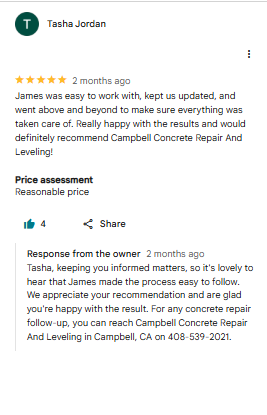
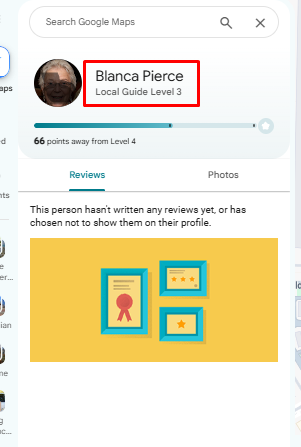
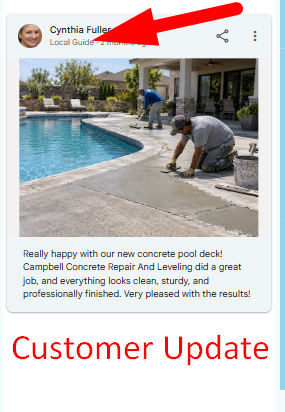
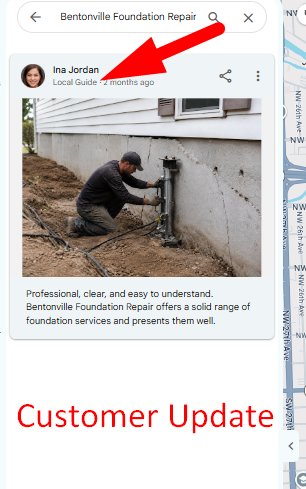
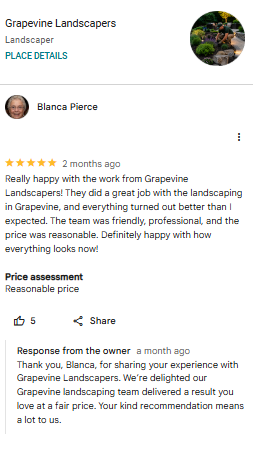
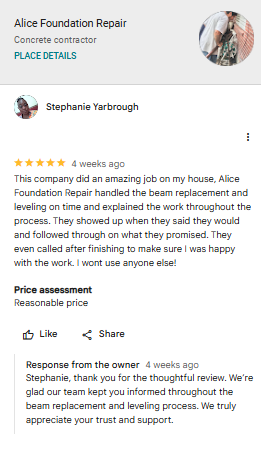
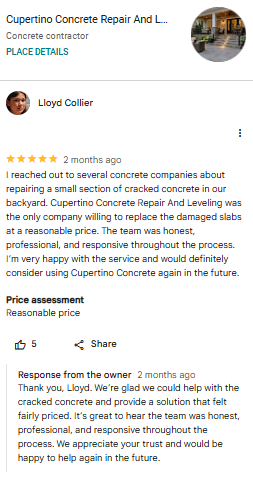
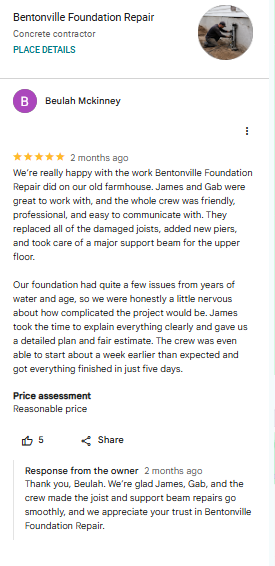
Google, then photos, then your reply, then Yelp and Facebook. These are reviews clients posted after real jobs, so you can see the detail the request should ask for.
After the job
The review comes from the client you just served. They get one short text when the work is done, with the Google, Yelp, or Facebook link for the profile that needs it.
Show the work
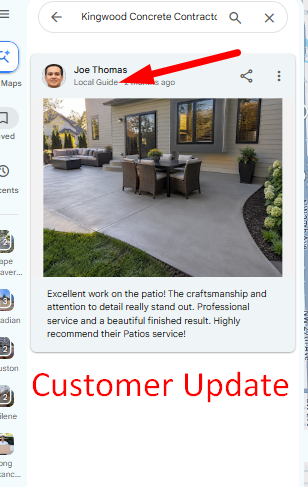
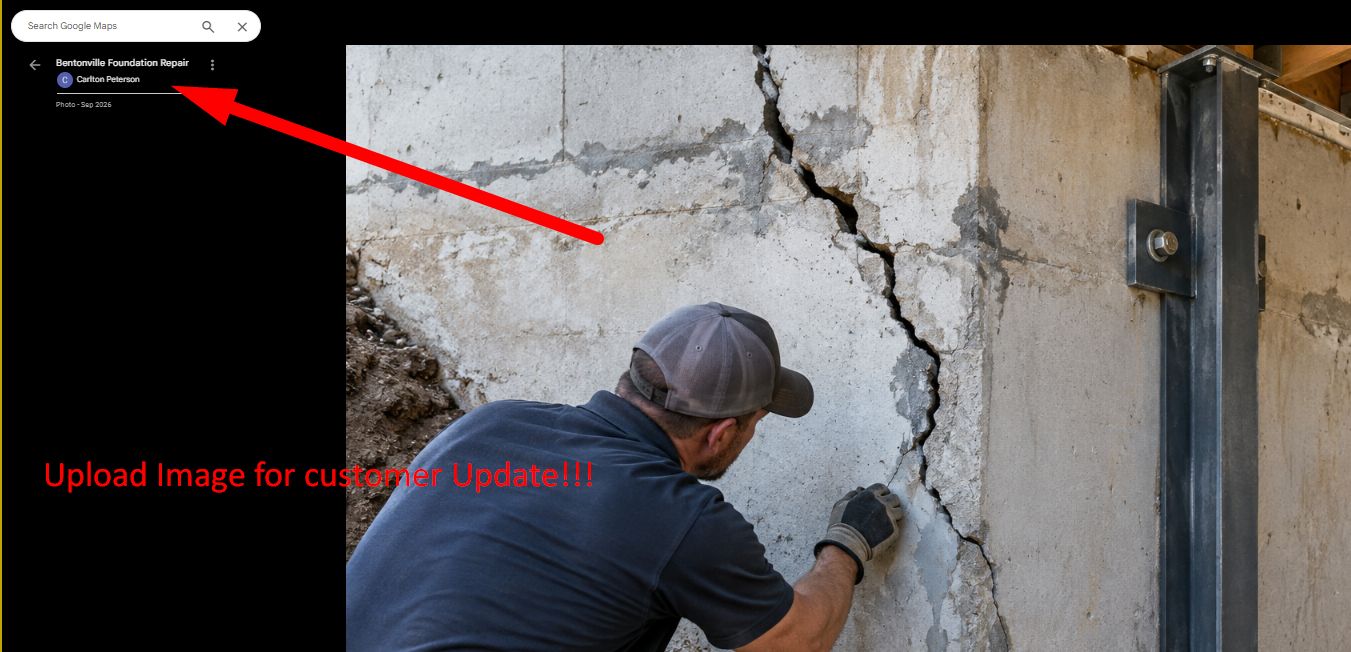
A star with no picture is easy to ignore. The request asks for a photo from the visit and a Google update so the listing shows the work, not an empty profile.
I'll check the three profiles and write the request your team sends after the next finished job.
Book a review planAnswer them
The next customer reads the job, the city, and whether you wrote back. We prompt for those details and give you a reply you can send the same day.
Yelp and Facebook
Home-service buyers still open Yelp. Neighbors still look at Facebook recommendations. The same customer who would review you on Google can be sent to the site that is quiet.
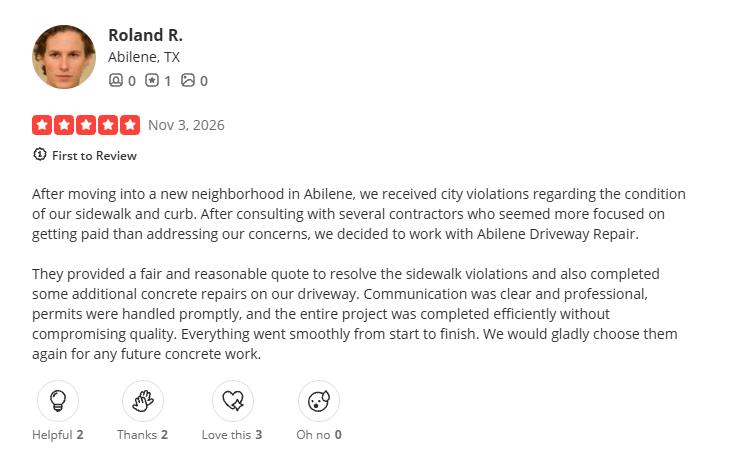
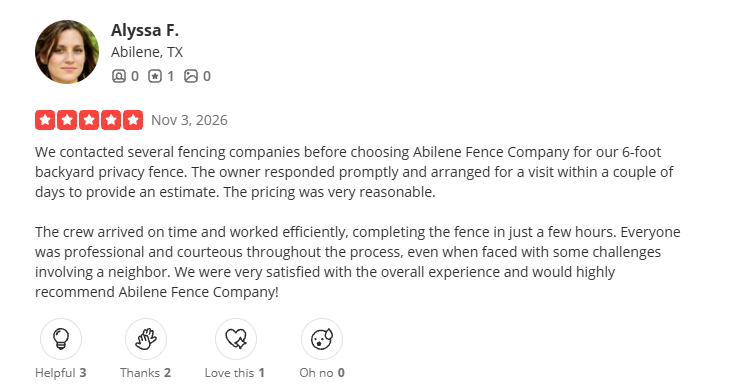
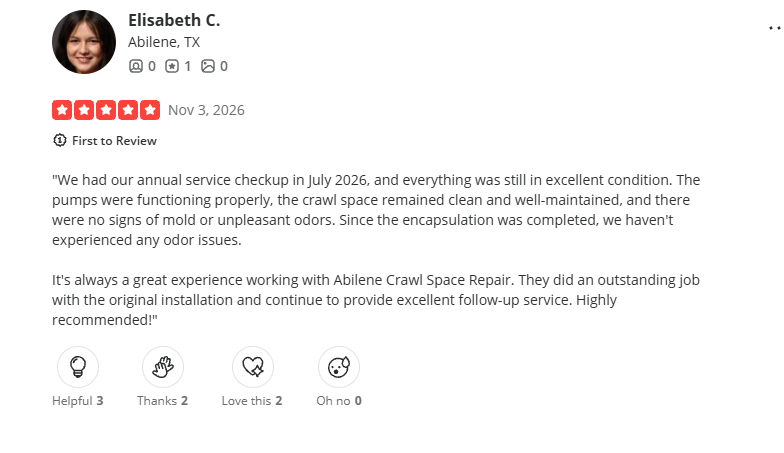
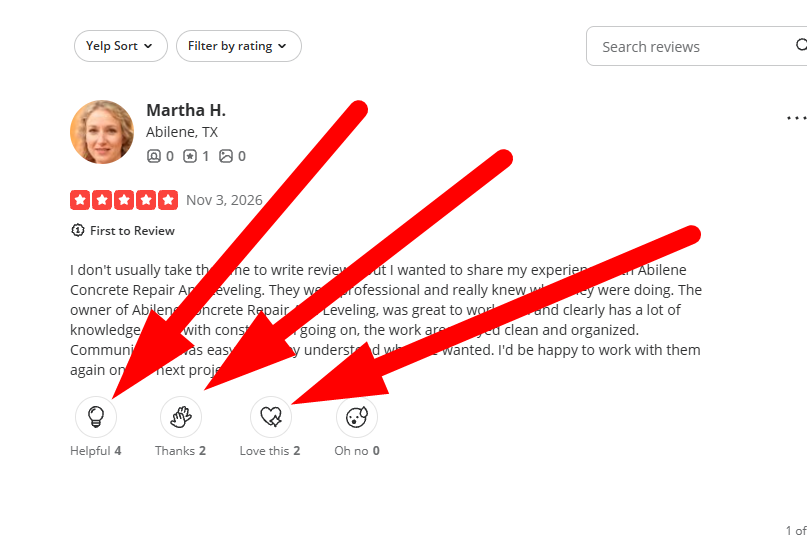
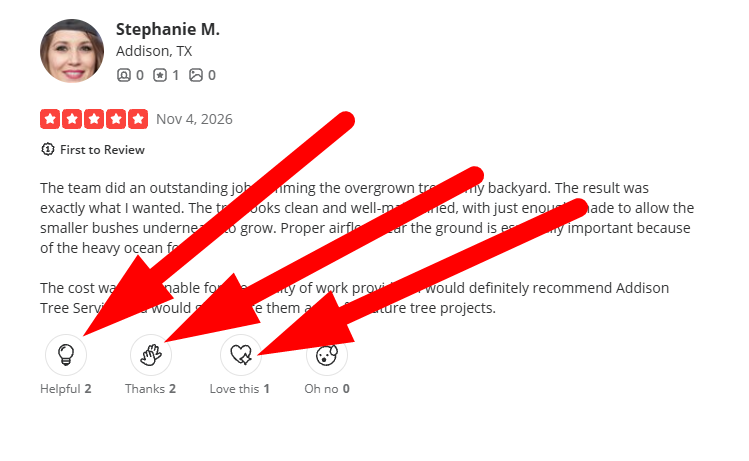
Customers name the town because they live in the area you serve.
The review is posted by the client, on the Google, Yelp, or Facebook profile they already use.
The ask points at whichever of the three listings is thin.
A same-day owner response shows the next customer that someone is there.
People check Google, Yelp, and Facebook before they call. A finished job is the moment a happy customer will review you, if the ask is short and the link is the right one. I set that up so the reviews come from clients you actually served, with the job, the city, and a photo in the post, and a reply from you underneath.
A text or email goes out when the work is finished, with a direct link to Google, Yelp, or Facebook. The customer already knows you.
The same customer can be routed to the profile that is thin. Google for the map pack, Yelp for home services, Facebook for recommendations.
The request asks for the job, the city, and a photo from the visit, so the review reads like the work you did.
A Facebook review or recommendation path for customers who already use your page, not only Maps.
Reply templates you send within a day, so the next prospect sees a business that answers.
Categories, photos, and which profile is behind before we ask anyone. A review link to the wrong listing wastes the customer.
FAQ
Direct answers for buyers evaluating review campaigns — useful for search snippets and AI citations.
Yes. The request goes to people you have already served, with a link to the profile that needs reviews. Google, Yelp, and Facebook are scoped to the listings you own.
No. Customers write their own reviews. The message only makes the link easy to open and asks them to mention the job, the city, and a photo if they have one.
We add Facebook to the same ask. Customers who will not open Google will often leave a recommendation on the page they already use.
After the profile check, the links and the message are ready for the next finished job. Reviews show up as those customers respond.
For service businesses, the top three map results are the new front page. Here is how to optimize your Google Business Profile, build local authority, and turn searches into booked calls.
Traffic is expensive. Conversion is leverage. Here is the systematic approach to product pages, cart, and checkout that lifts revenue per visitor without spending another dollar on ads.
Most "SEO checklists" are noise. Here is the prioritized list of technical fixes — Core Web Vitals, crawl budget, schema, and rendering — that compound into durable organic growth.
Local SEO for service businesses and brick-and-mortar brands — Google Business Profile optimization, local citations, and review systems that drive calls, bookings, and foot traffic.
Full-funnel search engine optimization — technical foundations, content authority, and link equity — engineered to put you on page one and keep you there.
End-to-end e-commerce growth — product SEO, conversion rate optimization, and merchandising — that lifts revenue per visitor and lowers customer acquisition cost.
I will check your Google, Yelp, and Facebook profiles and write the request your team sends after the next finished job.
Book a review plan